
Introduction
In today’s competitive advertising landscape, running ads without data is like shooting in the dark. While MRT advertising in Singapore offers massive reach, the real advantage comes from targeting the right audience at the right stations.
With the rise of data analytics and audience profiling, brands can now move beyond traditional mass exposure and adopt a precision-based out-of-home (OOH) strategy ensuring every dollar spent delivers measurable impact.
Singapore’s MRT system is one of the most efficient and heavily used transit networks in the world, with millions of daily commuters.
Key advantages: High daily reach and frequency Captive audience environment Coverage across all demographics Strategic locations (CBD, residential, lifestyle hubs)
But here’s the truth most agencies won’t tell you: Not all MRT stations deliver the same audience.
The Problem with Traditional MRT Media Buying
Most advertisers choose stations based on: “Prime” label High footfall numbers Popular locations (e.g. Dhoby Ghaut, Orchard) While these are important, they often ignore: Audience intent Consumer behavior Purchase readiness
Result?
High impressions, but low conversion efficiency
Introducing Data-Driven MRT Advertising
We leverage a data analytics system that goes beyond footfall — identifying who your audience actually is.
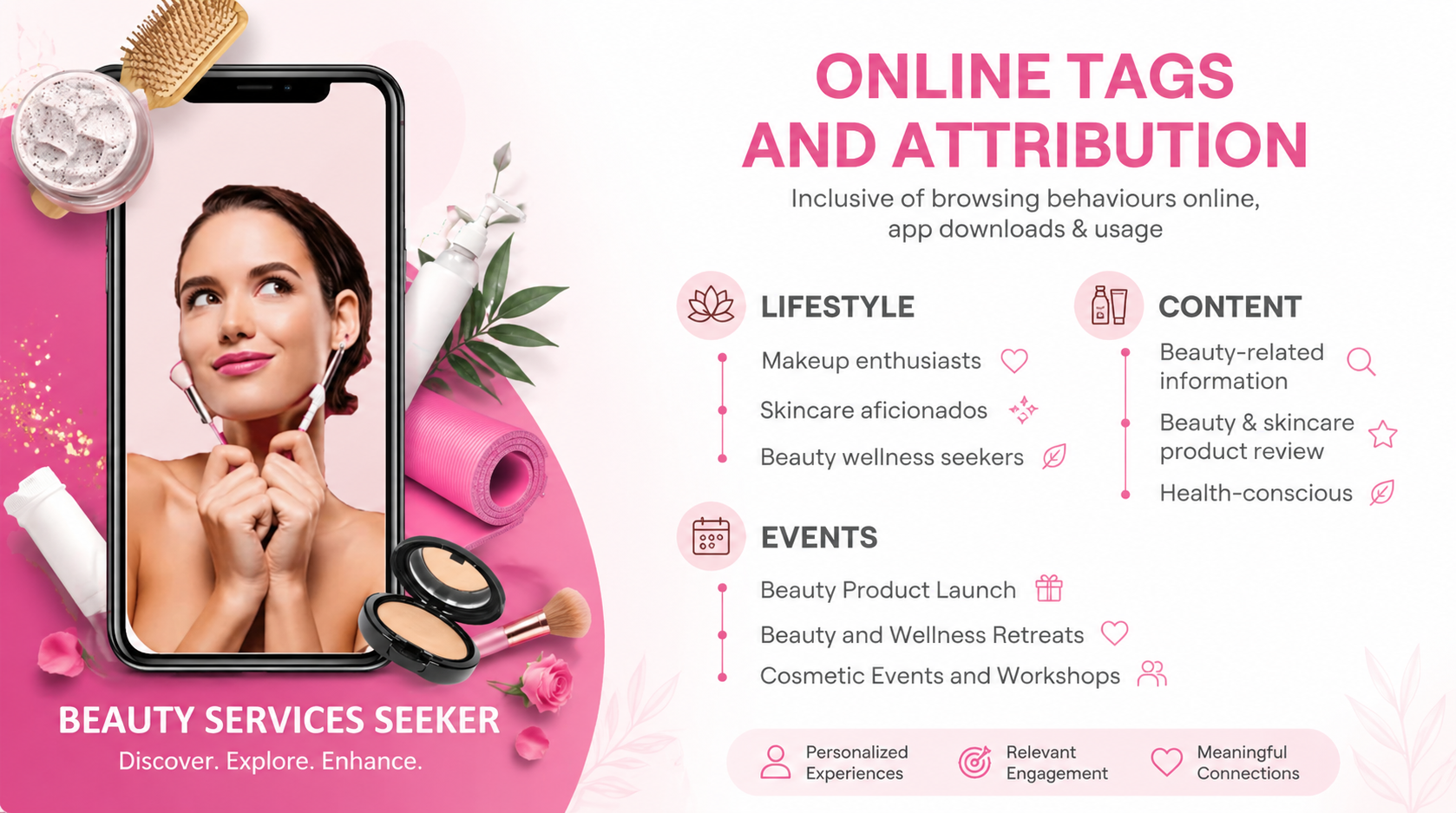
What We Analyse: Browsing behaviour App downloads & usage Lifestyle interests Content consumption patterns Event participation
Example: Beauty Services Seeker
Instead of targeting everyone, we identify users who are:
Lifestyle Makeup enthusiasts Skincare aficionados Beauty & wellness seekers
Content Behaviour Searching for beauty-related information Watching skincare reviews Engaging with health & wellness content
Event Signals Attending beauty product launches Joining workshops & wellness events
Matching the Right Stations to the Right Audience
Not all MRT stations attract the same persona. By using our data model, we map audience profiles to
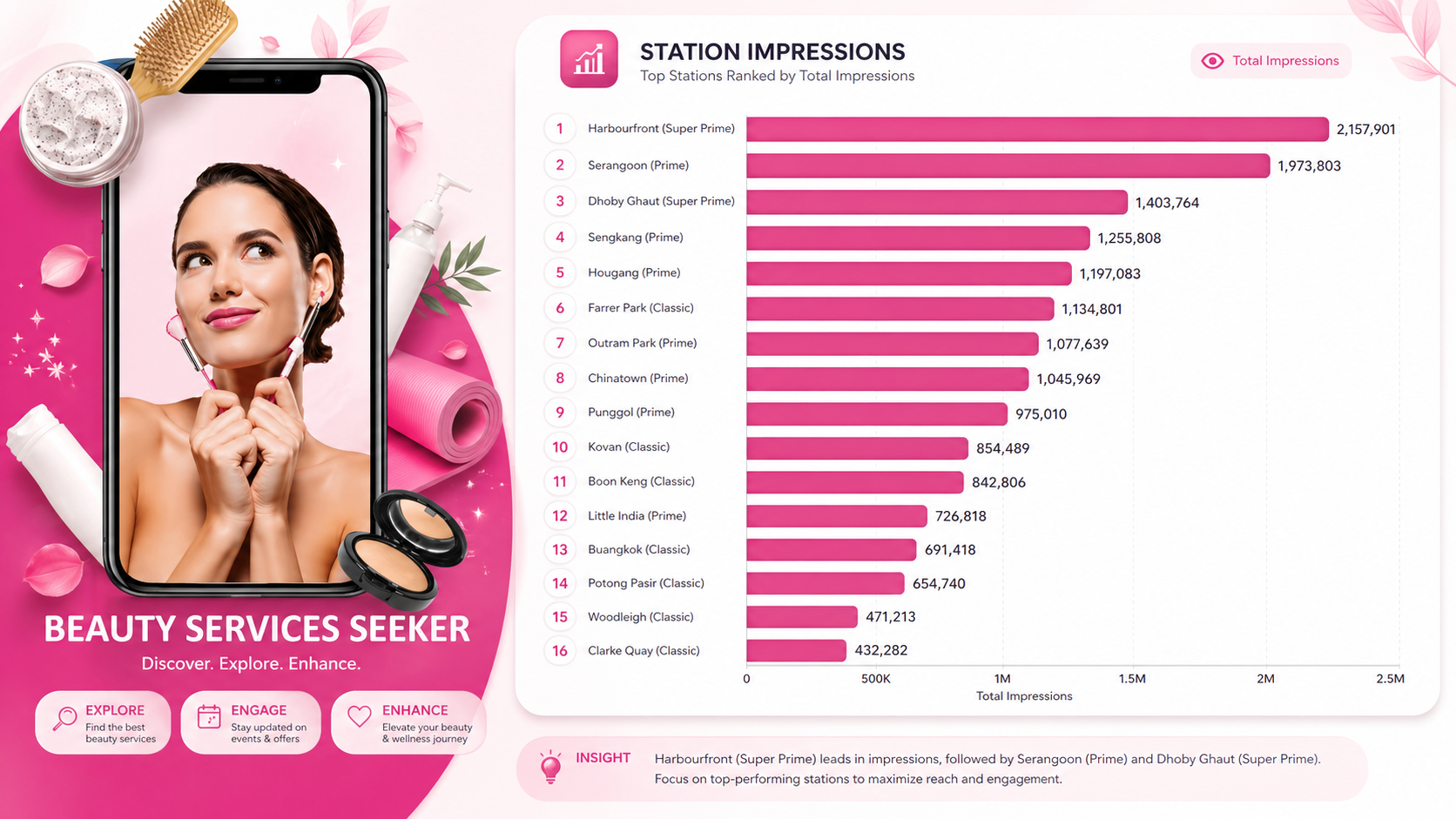
station-level insights: High-Value Example Stations (Monthly Impressions)
HarbourFront – 2.1M+
Serangoon – 1.9M+
Dhoby Ghaut – 1.4M+
Sengkang – 1.25M+
Hougang – 1.19M+
But more importantly, we identify: Which stations over-index for beauty, fitness, finance, or lifestyle audiences Where your ideal customers actually commute
From Mass Reach to Precision TargetingTraditional Approach:
Buy top stations
Hope for visibility
Our Data-Driven Approach:
Identify your ideal customer persona
Map high-index MRT stations
Optimise media placement based on behavior, not guesswork
Real Impact for Advertisers
Brands that adopt this strategy benefit from: Higher ROI
Less wastage, more relevant impressions Better Audience Quality
Reach people with actual interest, not just random commuters Stronger Brand Recall
Repeated exposure in relevant environments Smarter Budget Allocation
Invest where conversion probability is highest
Use Cases Across Industries
This strategy works across multiple verticals: Beauty & Skincare → Target beauty seekers Fitness & Wellness → Reach health-conscious commuters Finance & Insurance → Focus on PMEB-heavy stations FMCG Brands → Combine mass + targeted clusters Tech & Apps → Retarget high mobile-usage audiences
Conclusion
MRT advertising in Singapore is no longer just about visibility but it’s about precision, relevance, and measurable impact. By combining high-traffic locations with deep audience analytics, brands can transform transit media into a powerful performance channel, not just a branding tool.